Terms of Service
The Terms of Service of Pickering Hood Cleaning are the rules that apply when a commercial kitchen in Pickering or Ajax asks for a quote, books a visit, receives the signed certificate and settles the invoice. This page is general information and is not a signed agreement. The written quote that follows a free walk-through is the binding document for any single job, and its wording takes priority over anything written here. Every job is governed by the laws of Ontario. This version dates from September 2026.
The quote is the agreement
Scope named in writing. A quote lists the parts of the system it covers: how many canopies, the filters, the plenum behind them, the duct sections that can be reached, and the fan on the roof. It carries one price for that scope and a separate line for anything optional, such as cutting an access panel, supplying a replacement filter, or converting a bolted fan to a hinged one. An invoice never contains an item the quote did not.
Validity. Each quote carries an expiry date and the price stands until that date. After expiry, or after a change to the menu, the hours or the cooking equipment, confirm the figure by phone before booking. All three of those changes alter the grease load and therefore the work.
The two published prices. From $385 per visit for a single-hood kitchen up to ten feet, and from $725 per visit for a multi-hood kitchen of two to four canopies. Both are starting points for uncomplicated systems and are shown so an owner can judge the scale of the cost. Neither is an offer for a specific kitchen. Larger systems are quoted on site after a free walk-through.
Discoveries once the system is open. When a duct turns out to be rusted through, sealed off, or unsafe to enter, work on that section halts and you are told. No section is cleaned and billed on the guess that you would have said yes.
What the certificate asserts, and what it does not
The document itself. A signed health and safety certificate referencing the published NFPA 96 standard, stating which sections were cleaned, on what date, and to what condition. Before-and-after photographs of every cleaned surface travel with it. Any section that could not be reached is named on the certificate together with the reason.
Its limits. The certificate does not promise that the kitchen complies with the fire code. It is not an inspection by the authority having jurisdiction, which for a Pickering address is Pickering Fire Services and for an Ajax address is Ajax Fire and Emergency Services. It is not a structural or engineering opinion on the ductwork. It is not a credential issued by NFPA. Pickering Hood Cleaning references the published NFPA 96 standard and is not affiliated with NFPA. NFPA does not certify cleaning contractors, so no such certification exists for this or any other company to hold.
Between visits. A cleaning interval matched to the cooking volume is one requirement of the Ontario Fire Code, which references NFPA 96. Keeping the certificates on file, servicing the suppression system and running the line safely from one visit to the next remain the responsibility of the kitchen operator. The NFPA 96 guide explains what the standard expects.
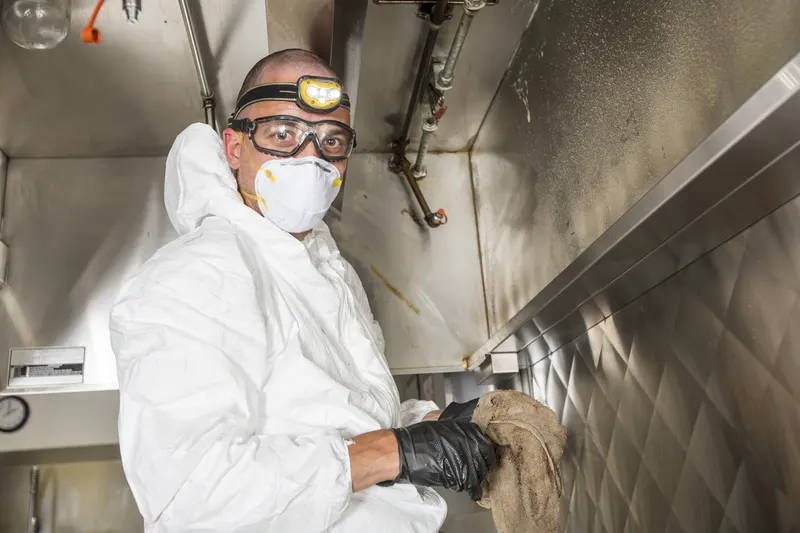
Access, safety, scheduling and cancellation
Getting in. You arrange entry to the building at the booked time and permission to go onto the roof. Most kitchens along Kingston Road, Bayly Street and Harwood Avenue are plaza tenants who do not control the roof, so the landlord or property manager has to agree first. Delayed roof permission is the single most frequent reason a booking slips, so open that conversation as soon as the quote arrives.
Isolating the fan. The rooftop fan needs a disconnect switch that lets the crew cut power before touching it. Where no disconnect is found on the walk-through, the fan is flagged and may be left out of scope until an electrician fits one.
The line before arrival. Cooking equipment cold, food covered or stored, and the cook line cleared wherever the scope needs it. A crew cannot work above a charbroiler that is still hot, and every minute spent waiting for it to cool comes out of the overnight window.
When the work happens. Visits run overnight or between services, so trade is not interrupted. A school, residence or arena kitchen with a fixed shutdown should book early enough that the visit lands inside it.
Calling it off. Fair notice is expected from both sides. A crew turned away at the door cannot fill that night with another job. Where a cancellation fee applies, it is the one printed on your quote and nothing else. A visit that Pickering Hood Cleaning cannot keep is moved to the next workable date at no charge.
Payment, work outside scope, liability and governing law
Payment. The invoice equals the quote plus any extra you approved in writing after it was issued. Payment terms are stated on the quote and repeated on the invoice. The certificate and the photographs are handed over when the visit is complete.
Not offered under these terms. Fire suppression servicing, gas work, electrical work, roofing repair, and grease trap pumping. When one of those turns out to be the real fix, it is written up and referred to the right trade instead of being attempted. The services that are offered appear on the services page.
Liability. Proof of WSIB coverage and liability insurance is supplied before work starts. Conditions that already exist, such as a corroded duct, a cracked roof curb or a worn membrane, are photographed before any tool is picked up so a later dispute has evidence. To the extent Ontario law permits, liability for a claim arising from a visit is limited to the amount invoiced for that visit, and no liability is accepted for lost business, for the result of a third-party inspection, or for damage caused by a condition you did not disclose.
Governing law. These terms, and each job performed under them, are governed by the laws of the Province of Ontario and the federal laws of Canada as they apply in Ontario.
Questions. Anything unclear on this page can be raised at 289-278-7261 or through the contact page. What happens to the details you send is covered by the privacy policy.
Terms of service: frequently asked questions
What happens when the crew finds duct the quote did not mention?
The extra section is reported, photographed where possible, and priced as a separate item for you to approve. It is not cleaned and billed on the spot. The certificate for that visit lists the sections that were in scope and records the new one as not reached, with the reason, so the paperwork stays truthful.
Does the certificate guarantee a pass from the fire service?
No. A fire inspection looks at the whole premises on the day, including suppression, extinguishers, exits and storage, none of which a cleaning visit touches. The certificate states that the exhaust system was cleaned to the referenced standard on a given date. That statement is the part a cleaning contractor can put a signature under.
Who is billed for a hinge kit or a new access panel?
Whoever owns that piece of the system. In a plaza the rooftop fan and the building duct usually belong to the landlord, while the canopy and its branch usually belong to the tenant. Each item is quoted on its own line so the right party can approve it, and none of it is folded into the cleaning price.
What if roof access falls through on the night?
The crew completes everything reachable from inside the kitchen and marks the fan as not reached. The invoice covers the scope that was finished, and a return trip for the fan is booked once the landlord grants access. Confirming roof permission before the visit avoids paying for that second trip.
Can a recurring cleaning schedule be changed later?
Yes, with fair notice from either side. A schedule should be reviewed whenever the menu, the hours or the equipment changes, because a new tandoor or a second daily service loads the system faster than the original schedule assumed. Until both sides agree a change, the price and scope for each recurring visit stay as written on the quote.